The design of a direct mail campaign plays a major role in how recipients respond. Even with a strong offer and a well targeted mailing list, poor design can reduce the effectiveness of your message.
A clear and well structured design helps capture attention, communicate value and encourage recipients to take action. By following a few key principles, businesses can significantly improve the performance of their campaigns.
Below are ten design tips that can help increase response rates.
Use a Clear Headline
Your headline is often the first element a reader notices. It should communicate the main benefit of your message and encourage the recipient to continue reading.
A simple and direct headline is usually more effective than complex or overly promotional language.
Keep the Message Focused
Direct mail works best when it focuses on a single message or offer. Too much information can overwhelm the reader and reduce engagement.
Clear and concise copy makes it easier for recipients to understand the value of your message.
Use Professional Images
High quality visuals can help attract attention and create a positive impression of your brand. Images should support the message and highlight the benefits of your product or service.
Professional photography or well designed graphics can make a significant difference to how your mail piece is perceived.
Highlight the Main Benefit
Many recipients will scan a mail piece rather than read it in full. Important information such as key benefits or offers should therefore be easy to spot.
Using larger text or placing important messages near the top of the design can improve visibility.
Include a Clear Call to Action
Every direct mail piece should encourage the reader to take a specific action. This might include visiting a website, making a phone call or requesting more information.
A clear call to action helps guide the reader and improves the chances of generating a response.
Use Personalisation
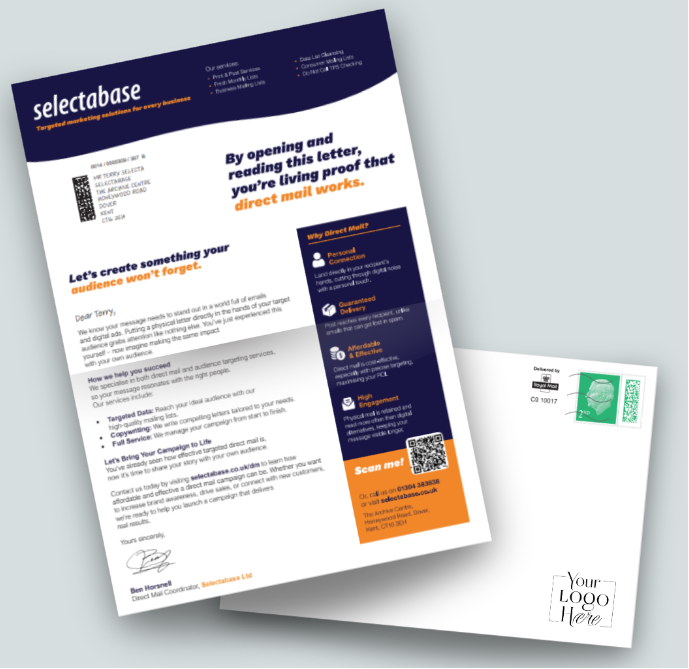
Personalised messages often perform better than generic communications. Addressing recipients by name or referencing their business can make your mail piece feel more relevant.
Personalisation also helps demonstrate that the campaign has been carefully targeted.
Choose the Right Format
Different formats can influence how your message is received. Postcards, letters and brochures all have different advantages depending on the type of campaign.
Choosing the right format helps ensure your message is delivered in the most effective way.
Make Contact Information Easy to Find
If a recipient wants to respond, they should be able to find your contact details quickly. Phone numbers, email addresses and website information should be clearly visible within the design.
Repeating contact details in more than one place can also improve response rates.
Use Colour Carefully
Colour can help highlight important sections of your design and guide the reader’s attention. Strategic use of colour can make key messages and calls to action stand out.
However, it is important to maintain a professional and balanced layout.
Test and Refine Your Designs
Testing different versions of a mail piece can provide valuable insights into what works best. Small changes to headlines, layouts or imagery can have a noticeable impact on response rates.
Regular testing allows businesses to continually improve their campaigns over time.
Designing Direct Mail That Delivers Results
Effective direct mail design focuses on clarity, relevance and strong messaging. When the layout is easy to follow and the key benefits are clearly presented, recipients are more likely to engage with the campaign.
By combining thoughtful design with accurate targeting, businesses can create direct mail campaigns that attract attention and generate measurable results.
Link to start creating https://www.selectabase.co.uk/services/create-and-post/
For more information on how we can help you, please call us on 01304 383838 or email your requirements or questions to [email protected]